Maritime piracy has historically affected, and continues to influence, numerous maritime regions worldwide. The sea, being an immense domain stretching across states and islands and serving as the primary “gateway” for the transportation of global commodities, is continuously targeted by power struggles and economic interests among diverse actors.
This article focuses on high-risk regions, with particular emphasis on the Eastern Mediterranean and the Middle East. The central question is whether there are modern mechanisms capable of curbing this “traditional” form of criminal activity while safeguarding the security of maritime passage for individuals, goods, and services. The adoption of global counter-piracy measures is of paramount importance to ensure the protection of economies and the safety of citizens.
Broodbank conceptualises the sea as a lawless domain, referring to the Mediterranean as “an anarchic, free zone” (Broodbank, 2013:394). This prevailing maritime anarchy can be investigated through the lens of realist theory, which posits that the pursuit of interest and benefit holds a central position in international relations. Air, land, and sea represent key strategic domains for all actors seeking to enhance their aerial, territorial, and maritime power. Consequently, the universal enforcement of control and adherence to international regulations often proves impossible.
For this report, data are abstracted from the International Maritime Organisation (IMO), specifically the organisation’s Annual Report on recorded incidents of maritime piracy in 2023.
Maritime Piracy: General Aspects
Piracy has threatened maritime security since ancient times, as historical evidence indicates that it endangered the naval trade of the Minoans in the ancient Eastern Mediterranean (Fu et al., 2010). In the contemporary era, 80% of global merchandise trade is transferred between ports by approximately 50,000 merchant vessels (United Nations, 2024). Alongside the rapid growth of the global economy (World Bank, 2023), the expansion of world trade and maritime transport activities has led to a corresponding increase in piracy incidents (IMO, 2024).
Piracy is often described as an irregular, typically hostile economic activity (Knapp, 2020) and as a form of violent organised crime (Khondaker et al., 2013). The threat to global markets is evident, given that a significant proportion of the world’s energy supply passes through regions plagued by piracy, such as Southeast Asia (Hong & Ng, 2010). In fact, the majority of reported incidents in 2023 occurred in these areas, as illustrated in Figure 1 below, based on data from the International Maritime Bureau (IMB):
Figure 1
Total Incidents by World Region, January–December 2023
Source: ICC – IMB Piracy and Armed Robbery Against Ships, January–December 2023
It is evident that piracy thrives in regions where maritime trade is intense but authority and enforcement remain relatively weak (Akan, Gultekin & Bayar, 2022).
The International Maritime Bureau (IMB) Report for 2023
According to the International Maritime Bureau (IMB), a total of 120 incidents of maritime piracy and armed robbery against ships were reported in 2023, compared to 115 incidents in 2022, demonstrating a slight year-on-year increase, as illustrated in Figure 2 below:
Figure 2 – Total Reported Piracy and Armed Robbery Incidents, 2022 vs. 2023
Source: ICC – IMB Piracy and Armed Robbery Against Ships, January–December 2023
Growing security concerns are consistently highlighted in several strategic maritime regions, including the Gulf of Oman (Alsawalqa & Venter, 2022), the Gulf of Aden (Hamza & Priotti, 2020), and the Straits of Malacca (Poonnawatt, 2023) and Singapore (Chong, 2017).
Within the wider Indonesian archipelago, piracy incidents nearly doubled between 2022 and 2023, rising from 10 recorded incidents in 2022 to 18 in 2023 (IMB Report, 2023).
The Gulf of Oman
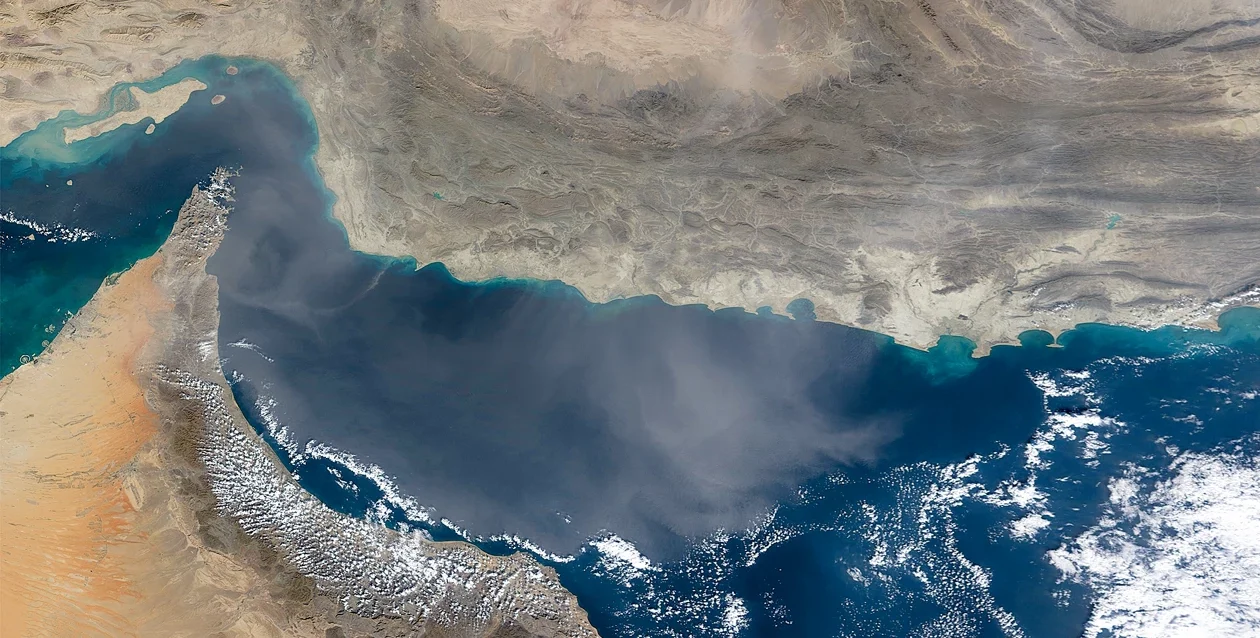
The Gulf of Oman and the entrance to the Persian Gulf are characterized by a heightened risk of piracy-related activity (Modarress, Ansari & Thies, 2012), as the Persian Gulf states collectively represent the largest global exporters of fuel (Shepard & Pratson, 2020).
The majority of these energy exports require transit through the Strait of Hormuz, which serves as the only maritime passage from the Persian Gulf to international waters. This concentration of energy flows renders the region a high-value target for both piracy and broader maritime security threats.
The Gulf of Aden
The Gulf of Aden and the Somali coastline are among the most piracy-prone regions worldwide, as approximately 12% of the global oil supply passes through this area (Guha & Guha, 2011), with an estimated 16,000 vessels transiting annually (Varsami & Popescu, 2010).
A recent notable case is the activity of the Houthi rebels in the Yemeni Sea, which has further escalated the region’s security challenges and demonstrated the evolving dynamics of maritime threats.
The Singapore and Malacca Straits
The Singapore Strait remains a significant area of concern due to its persistently high number of reported piracy incidents (IMB, 2023), as illustrated in Figure 3 below:
Figure 3 – Southeast Asia: Singapore Straits, Total Reported Incidents
Source: ICC – IMB Piracy and Armed Robbery Against Ships, January–December 2023
Furthermore, piracy in the Straits of Malacca poses a particularly elevated threat to oil tankers passing through this maritime corridor (Wang, Yang & Lu, 2018). These straits act as the primary gateway connecting the Indian Ocean to the Suez Canal, Egypt, and Europe, thereby increasing their strategic importance.
Although geographically narrow, the Singapore and Malacca Straits represent two of the most critical chokepoints for global trade and energy security (Akan, Gultekin & Bayar, 2022).
Counter-Piracy Measures
The United Nations Convention on the Law of the Sea (UNCLOS) stipulates that all states are obliged to cooperate to the fullest possible extent in the suppression of piracy (UNCLOS, Article 100). Given that piracy-related threats are predominantly transnational, the development of multinational response strategies is essential, requiring comprehensive collaboration among all relevant stakeholders (Agarwalaa et al., 2020). Beyond the IMB’s Piracy Reporting Centre, which operates a 24-hour system for reporting piracy incidents and providing immediate assistance to vessels under threat, the armed presence of international security forces in piracy-prone regions is considered indispensable.
The implementation of advanced detection and monitoring systems also plays a crucial role in preventing piracy incidents. These include the deployment of long-range radar technologies, high-altitude unmanned aerial vehicles, ocean surveillance vessels, and acoustic monitoring systems (www.globalsecurity.org). Moreover, the Automatic Identification System (AIS), as established under the IMO Resolution A.1106(29) (2015), can be installed on commercial vessels to prevent collisions and enhance traffic management in major ports and maritime corridors (International Maritime Organisation, 2015).
However, technological measures alone are insufficient. The human element remains pivotal: crew members must receive adequate training, shipowners are required to comply with guidelines set forth by the IMB, and the coordinated exchange of information among governments, shipping companies, and maritime organisations is vital to strengthen collective capabilities against piracy. Finally, the reinforcement of national and international legal frameworks is of paramount importance to facilitate the prosecution of pirates, ensuring that legal actions are pursued effectively from the preparatory stages of criminal activity to enforcement.
Conclusion
As terrestrial resources continue to diminish, the oceans have become the next “target” for meeting human needs, global economic interests, competition over natural resources, and geopolitical power struggles. Since the oceans cover more than 70% of the Earth’s surface, the effective containment or elimination of piracy cannot be achieved by a single state or through a single policy approach. Instead, addressing piracy requires a multilayered, collaborative, and technologically integrated framework that engages a wide spectrum of actors. Ensuring maritime security has become a critical prerequisite for safeguarding the economic, political, and strategic interests of nations, as they form part of an increasingly interconnected global system that is being progressively, but methodically, affected by piracy and other forms of maritime crime. In conclusion, piracy constitutes a crime against humanity, and addressing it effectively demands coordinated, sustained, and large-scale efforts at both national and international levels to restrict, mitigate, and ultimately eradicate its occurrence.
References
Akan, E., Gültekin, T., & Bayar, S. (2022). Statistical analysis of maritime piracy cases in world territorial waters. Journal of transportation security, 15(3), 263-280.
Alsawalqa, R. O., & Venter, D. (2022). Piracy and maritime security in the north-western Indian ocean: From the gulf of oman to the waters off the somali coast. Insight on Africa, 14(1), 88-103.
Agarwalaa, N., Erezb, R., & Narayananc, S. (2020). Enhancing Maritime Domain Awareness in the Indo-Pacific and the Eastern Mediterranean Regions: Indian and Israeli Perspectives. maritime, 16.
Broodbank, C. (2013). The Making of the Middle Sea: A History of the Mediterranean from the Beginning to the Emergence of the Classical World. Thames & Hudson.
Chong, M. D. (2017). Securitising piracy and maritime terrorism along the Malacca and Singapore Straits: Singapore and the importance of facilitating factors. Maritime Security in East and Southeast Asia: Political Challenges in Asian Waters, 43-84.
Fu, X., Ng, A. K., & Lau, Y. Y. (2010). The impacts of maritime piracy on global economic development: the case of Somalia. Maritime Policy & Management, 37(7), 677-697.
GDP per capita. (n.d.). The World Bank. Retrieved May 1, 2024, from https://data.worldbank.org/indicator/NY.GDP.PCAP.CD
Guha, B., & Guha, A. S. (2011). Pirates and traders: Some economics of pirate-infested seas. Economics letters, 111(2), 147-150.
Hamza, F. R., & Priotti, J. P. (2020). Maritime trade and piracy in the Gulf of Aden and the Indian Ocean (1994–2017). Journal of transportation security, 13(3), 141-158.
Hong, N., & Ng, A. K. (2010). The international legal instruments in addressing piracy and maritime terrorism: A critical review. Research in Transportation Economics, 27(1), 51-60.
Khondaker, A. N., Rahman, S. M., & Khan, R. A. (2013). Dynamics of piracy in maritime transportation. Journal of Transportation Security, 6, 193-207.
Knapp, A. B. (2020). Piracy in the Late Bronze Age eastern Mediterranean? A cautionary tale. In Nomads of the Mediterranean: Trade and Contact in the Bronze and Iron Ages (pp. 142-160). Brill.
Maritime Domain Awareness [MDA] . (n.d.). GlobalSecurity.org. Retrieved May 1, 2024, from https://www.globalsecurity.org/intell/systems/mda.htm
Maritime Piracy. (n.d.). United Nations. Retrieved May 1, 2024, from https://unctad.org/system/files/official-document/dtltlb2013d1_en.pdf
Maritime Security and Piracy. (n.d.). International Maritime Organization. Retrieved May 1, 2024, from https://www.imo.org/en/OurWork/Security/Pages/MaritimeSecurity.aspx
Modarress, B., Ansari, A., & Thies, E. (2012). The effect of transnational threats on the security of Persian Gulf maritime petroleum transportation. Journal of Transportation Security, 5, 169-186.
New IMB report reveals concerning rise in maritime piracy incidents in 2023 . (n.d.). ICC Commercial Crime Services. Retrieved May 1, 2024, from https://www.icc-ccs.org/index.php/1342-new-imb-report-reveals-concerning-rise-in-maritime-piracy-incidents-in-2023
PIRACY AND ARMED ROBBERY AGAINST SHIPS. (n.d.). ICC- IMB Piracy and Armed Robbery Against Ships. Retrieved May 1, 2024, from https://www.icc-ccs.org/reports/2023%20Jan%20-%20Jun%20IMB%20Piracy%20and%20Armed%20Robbery%20Report.pdf
Poonnawatt, K. (2023). Multilateral cooperation against maritime piracy in the Straits of Malacca: from the RMSI to ReCAAP. Marine Policy, 152, 105628.
Resolution A.1106(29). (2015, December 14). International Maritime Organization. Retrieved May 1, 2024, from https://wwwcdn.imo.org/localresources/en/OurWork/Safety/Documents/AIS/Resolution%20A.1106(29).pdf
Shepard, J. U., & Pratson, L. F. (2020). Maritime piracy in the Strait of Hormuz and implications of energy export security. Energy Policy, 140, 111379.
United Nations Convention on the Law of the Sea. (n.d.). United Nations. Retrieved May 1, 2024, from https://www.un.org/depts/los/convention_agreements/texts/unclos/unclos_e.pdf
Varsami, A., & Popescu, C. (2010). PIRACY IN THE GULF OF ADEN-A PROBLEM OF OUR DAYS. Annals (Constanţa Maritime University), 11(13).
Wang, S., Yang, D., & Lu, J. (2018). A connectivity reliability-cost approach for path selection in the maritime transportation of China’s crude oil imports. Maritime Policy & Management, 45(5), 567-584.
To provide the best experiences, we use technologies like cookies to store and/or access device information. Consenting to these technologies will allow us to process data such as browsing behavior or unique IDs on this site. Not consenting or withdrawing consent, may adversely affect certain features and functions.
Functional
Always active
The technical storage or access is strictly necessary for the legitimate purpose of enabling the use of a specific service explicitly requested by the subscriber or user, or for the sole purpose of carrying out the transmission of a communication over an electronic communications network.
Preferences
The technical storage or access is necessary for the legitimate purpose of storing preferences that are not requested by the subscriber or user.
Statistics
The technical storage or access that is used exclusively for statistical purposes.The technical storage or access that is used exclusively for anonymous statistical purposes. Without a subpoena, voluntary compliance on the part of your Internet Service Provider, or additional records from a third party, information stored or retrieved for this purpose alone cannot usually be used to identify you.
Marketing
The technical storage or access is required to create user profiles to send advertising, or to track the user on a website or across several websites for similar marketing purposes.